The Allotropes of Tin
Mark O’Flynn
From the sublime to the ridiculous there is only one step

                                                         Napoleon Bonaparte         After the retreat from Moscow, 1812

Unbeknowst to him

it takes a chemistry lesson

to decipher the shreds of fabric left in snow.

Absent tin tells us more than tin;

cloth more than fossil

when the Spring thaw melts

to reveal history’s diet of bones.

Certainly the neatest looking army in the field

Napoleon’s men march towards the cold,

not knowing the compound elements

of French tin will crystalise at less than five degrees.

As coal to diamond, all those tin buttons

shining on the parade grounds of Paris,

who could imagine defeat

beneath the sun’s benevolence?

By the time they reach the Russian Winter

the smart, tin buttons, yes, have crystalised,

corroded and crumbled from the uniforms

of Napoleon’s sublime advance.

His men fight to to hold their trowsers up,

clutch their uniforms together,

let alone aim a shivering musket

at an enemy laughing in the distance.

Their defeat creeps upon them like a mould.

Coal to diamond; love to hate; loyalty to despair;

flesh and the rot within the flesh.

The allotropes of tin slowly vanquish

an emperor, leaving their clues,

stripped of all ambition now,

naked arses fleeing,

cooling quickly under the warm snow.
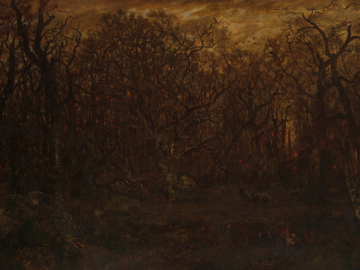
Feature image via 'Art Collection - The Metropolitan Museum of Art'
Related works:
Feature image via 'Art Collection - The Metropolitan Museum of Art'
Read more
Lutaralipina – the giant freshwater crayfish ( Astacopsis gouldi) – is the world’s largest freshwater invertebrate. It can live for up to 80 years, grow to almost a metre in length and weigh as much as six kilograms. This rare and secretive creature lurks…
Read more